How to Ace the Technical DevOps Interview (Without Memorizing Code)
Apr 12, 2026
Look, I still get sweaty palms thinking about that SRE interview at a mid-sized fintech in Amsterdam two years ago. My team had just finished migrating a legacy app to Kubernetes, but our deployments were mysteriously failing. It ended up being a nasty Docker 24.0 image layer caching issue that ate up hours of my life to debug—talk about embarrassing timing right before a massive career move.
Here’s the truth: I desperately needed to nail the technical round, but I refused to recite rote scripts. Honestly, who actually has time to memorize Terraform modules when real-world production fires are burning? Over my 14 years in tech—starting out as a sysadmin in scrappy startups, moving to DevOps at massive enterprises, and even doing a stint at a small agency here in the Netherlands—I’ve sat on both sides of the interview table. Sure, I’ve collected the RHCE, CKA, and AWS Solutions Architect certs along the way. But the reality is that interviews aren’t about the paper you hold. They’re about proving you won’t panic when things go entirely sideways.
During that specific interview, I completely bombed a question because I mixed up Ansible Tower with Jenkins. Looking back, I definitely should have known Tower is geared more toward enterprise Ansible orchestration. It was a big lesson learned the hard way: you have to understand your tools deeply, not just throw around industry buzzwords.
Talk Real Projects, Not Theory
Instead of giving them generic textbook answers like “CI/CD is great,” I walked them through exactly how I’d used Terraform to provision EKS clusters the previous month. I told them, “Look, here’s the state file locking issue I hit on a terraform plan—I actually had to use -lock=false because we had a split workspace.” They absolutely ate it up.
The reality of this industry is that interviewers want your war stories. They want to hear about that time I accidentally deleted /boot/vmlinuz on a RHEL prod box. (Please don’t ask—I fat-fingered rm during what was supposed to be a routine kernel update rescue). I explained how I booted from rescue mode, chrooted in, grabbed the RPM from the repos, and had the whole thing back up in 45 minutes. That kind of story shows you can troubleshoot under serious pressure.
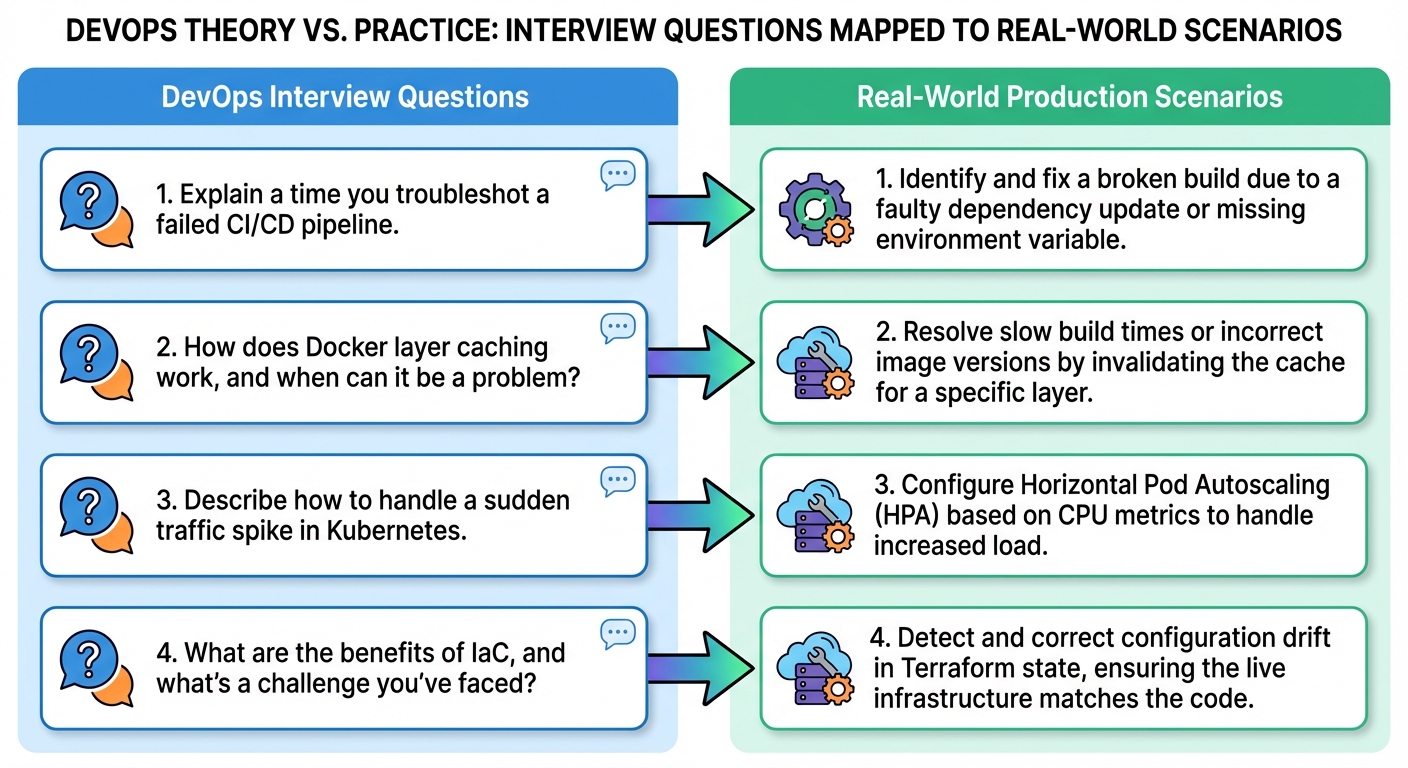
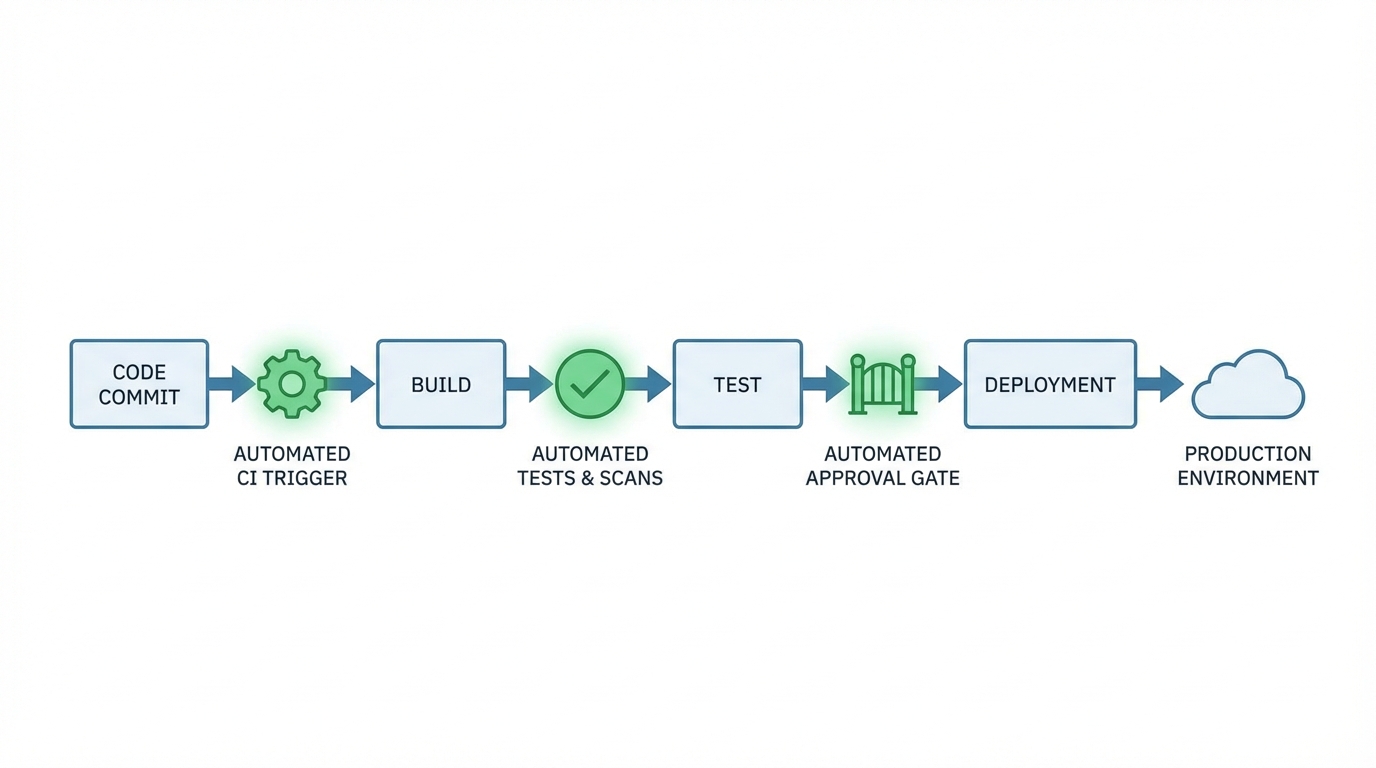
Draw heavily from your actual day-to-day grind. I told them: “Mornings? I’m usually triaging alerts in Prometheus, then running my Ansible 2.15 playbooks to catch config drift across 50 nodes. Afternoons? I’m reviewing PRs for Docker builds.” You don’t need to memorize anything if you can just explain your workflows end-to-end. Why did that pipeline flake out? Well, the image scan failed on a vulnerability in our Alpine base, so I fixed it with docker scan --accept-license and pushed it through.
Communication Trumps Code Dumps
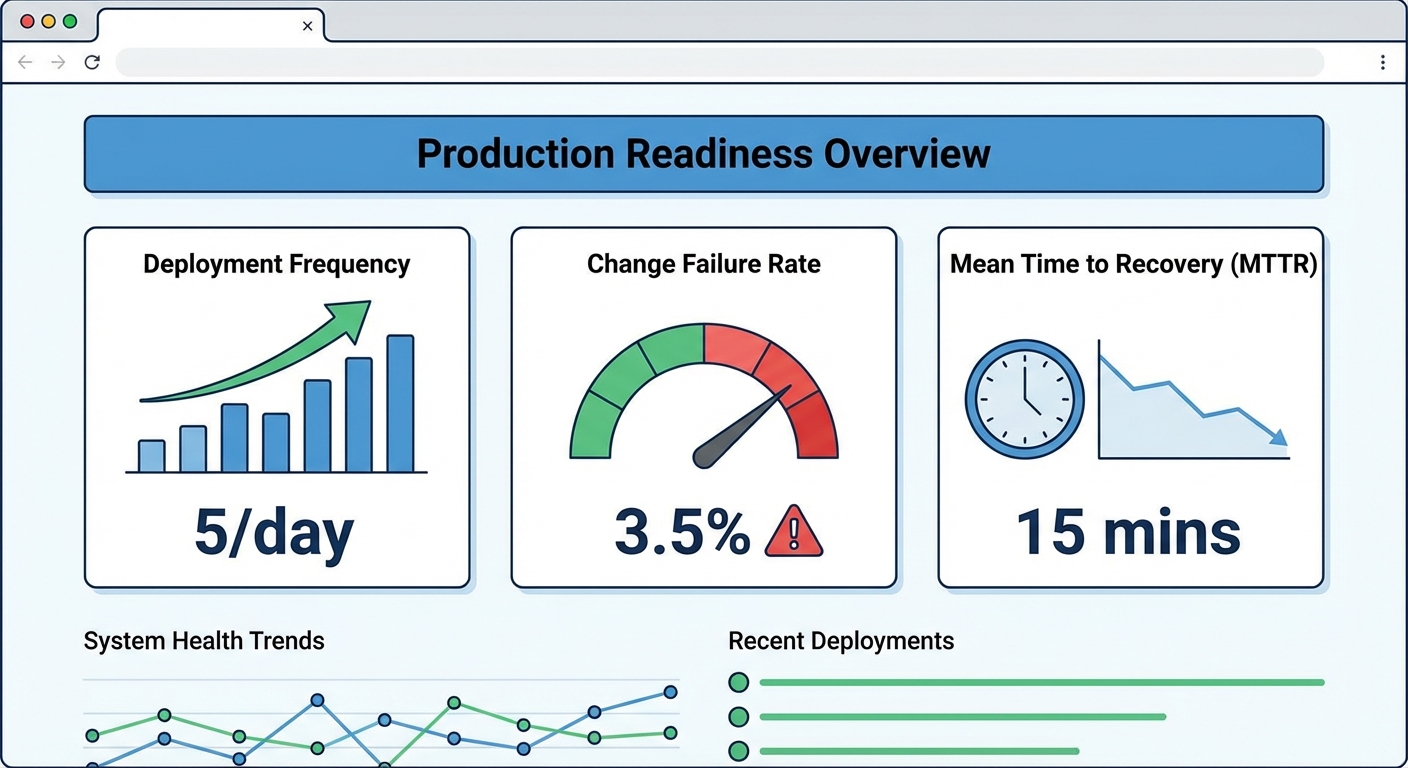
I remember a DevOps course I took where the “Strategic Career Growth” section really hammered home how much soft skills matter. Being able to influence a team beats having perfect syntax every single time. Going into the interview, I wasn’t entirely sure if my Dutch accent would hold me back, but structuring my answers as “problem, action, result” completely sealed the deal. I told them, “We cut deploy time 40% by…” and let them probe deeper. When they asked, “What if AWS has a region outage?” I talked about doing chaos engineering with Terraform destroy/recreate demos to show I actively think about resilience.
I know this is a bit of a tangent, but honestly, Jenkins is totally overrated for complex IaC. I always tell people to stick to GitHub Actions unless corporate forces you into Jenkins. Some folks swear by it, and fair enough, but that’s my take.
Quick heads-up on edge cases: This conversational storytelling approach is a lot harder if you’re stuck working on air-gapped setups. I had to deal with one at an agency once, and it was pure pain. If that’s your background, practice explaining those highly restricted scenarios out loud beforehand.
Did I get the offer? Yeah, I did. But I still sit around and wonder if they would have passed on me without that RHEL kernel disaster anecdote…
What’s your go-to interview survival story?
💡 Take the next step
If this resonated, RHCSA Bootcamp (RHEL 10) - Arabic is where I teach this systematically — no fluff, just the skills that matter in the real world.