
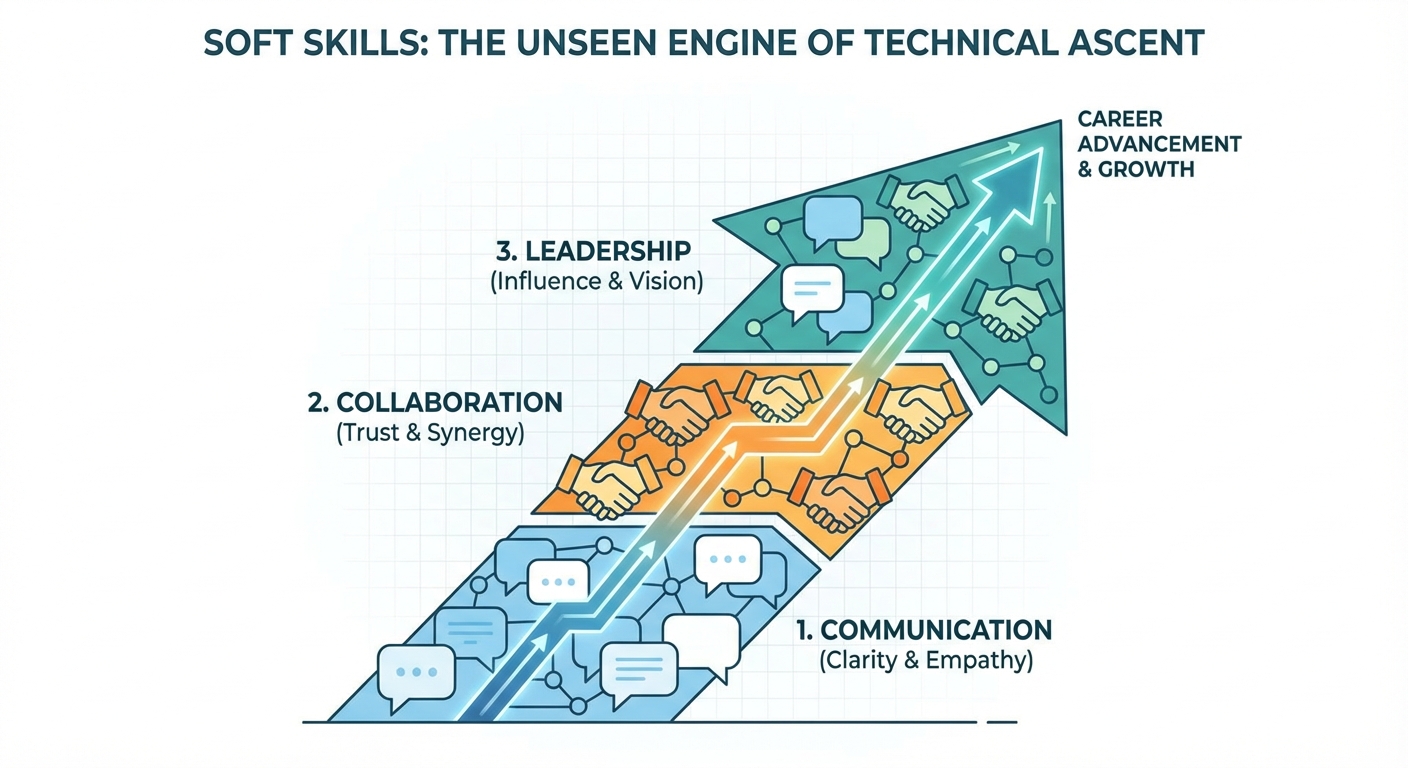
3 Soft Skills That Will Get You Promoted Faster Than Knowing Kubernetes
Apr 12, 2026
I still vividly remember sitting in that 1:1 with my manager at the mid-sized fintech company back in 2019, totally convinced the promotion talk was coming. I’d just led our huge migration to Kubernetes, automated the whole CI/CD pipeline with Jenkins, and written Terraform modules that half the engineering team was straight-up copying without a second thought. I mean, I was the infrastructure guy. So when he looked at me and said, “Ahmed, your technical work is solid, but I’m promoting Marcus instead,” my stomach just dropped. It felt like that time I accidentally deleted the kernel file on a RHEL box in my early SRE days—yeah, I actually did that, recovered it somehow, and man, did I ever learn the hard way about backups.
That moment hit me right in the gut. But it also woke me up to what was really happening around me.
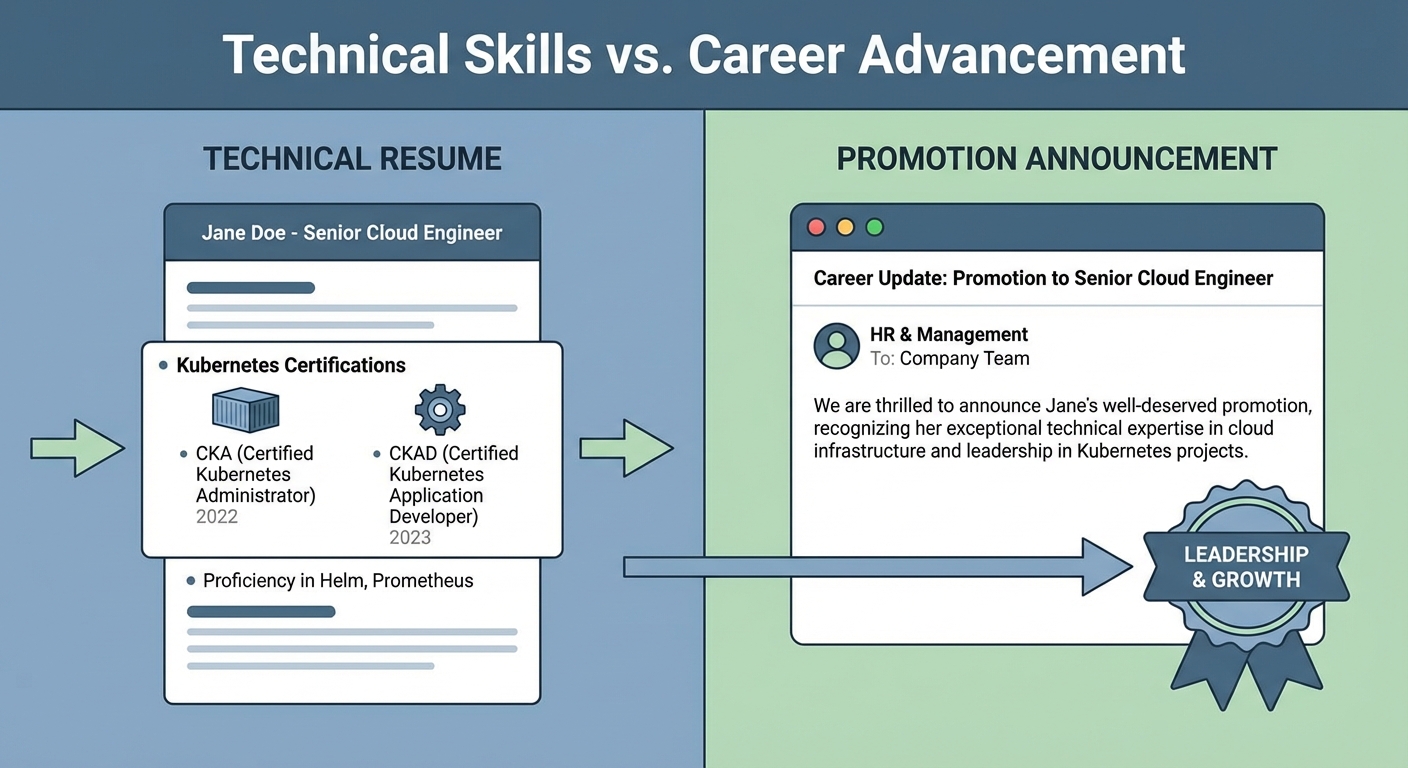
Over my 14 years in tech—from those agency gigs to chaotic startups and now my gig at a bigger enterprise in the Netherlands—I’ve realized how off-base I was about what actually matters most as an engineer. Organizational clarity beats out architectural elegance every time. Communication that people can see trumps just being quietly competent. And figuring out how to work with folks outweighs being dead right about Flux CD versus Argo CD (they’re honestly way more alike than I used to think, and I wasted so much breath arguing it).
None of this stuff came easy to me, to be real. I’m the guy who’d rather slap on headphones and crank out code than sit through another meeting. But seeing Marcus get that promotion? It flipped a switch. I started noticing these patterns I couldn’t unsee.
Communication That Actually Moves Things Forward
One of the first things I worked on was how I talked about problems—not just spitting out the “what,” but the whole “how” too. No more frantic Slacks like “Jenkins pipeline busted.” I’d break down which systems were affected, why it was screwing the business, and exactly what I needed from other teams to fix it. When leaders get the human side of your tech chaos, they start seeing you differently. LinkedIn data even backs it up—tech folks blending hard skills with good communication climb 11% faster.
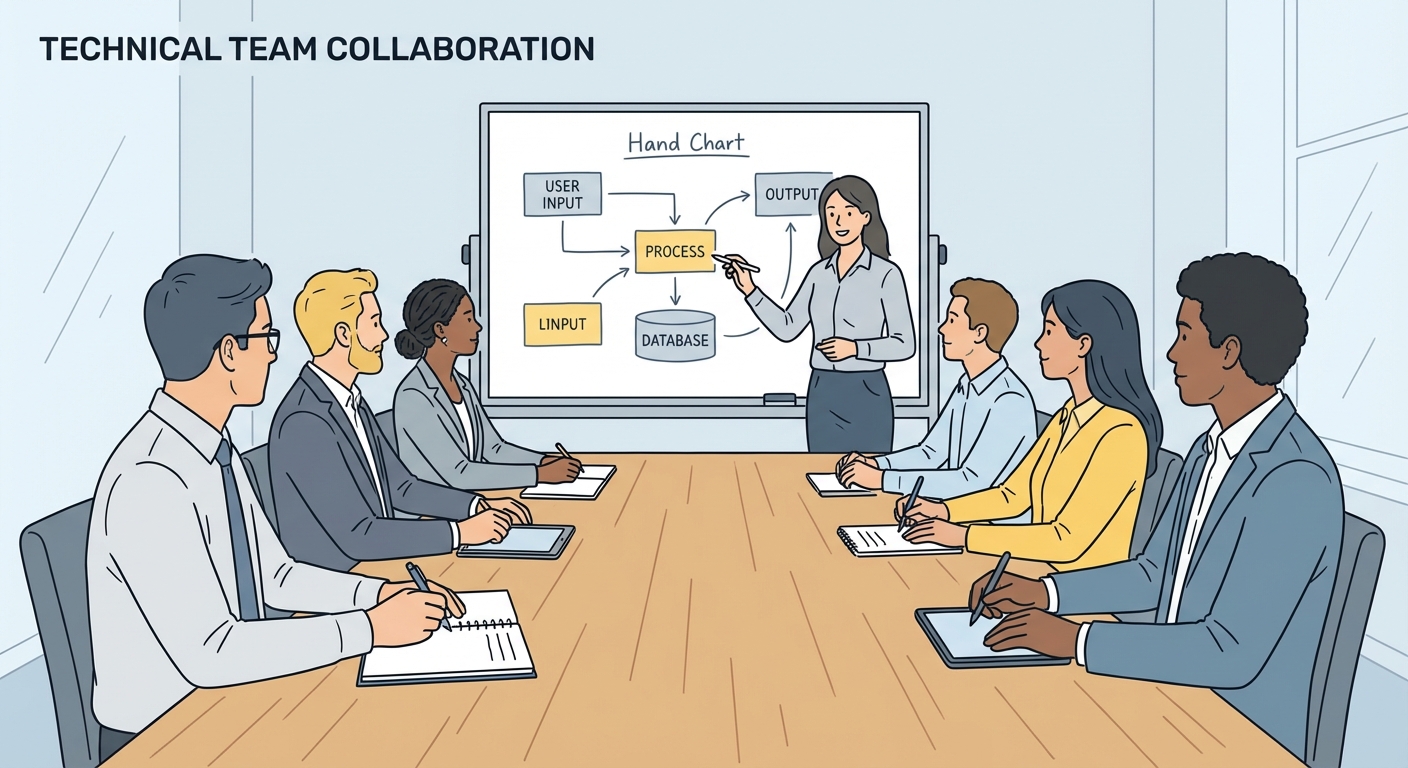
But here’s something that wasn’t obvious to me at all—maybe it is to you, but it took me forever to get that people crave context. I used to figure tech details were plenty, like “Redis is down” should do it, right? Nope. Totally wrong. Now I make myself explain not just what broke, but how it messes with user experience, what revenue’s on the line, and what I’m doing to patch it. Sometimes it feels a bit overkill, almost redundant? But damn, it lands.
The Organizational Skills Nobody Talks About
Then there was this weird little shift for me: stepping up my organization game. Not like desk-tidying or color-coding my calendar, but making everyone else’s day smoother. Team scrambling for docs? I built a living system for it. Standups dragging? I’d lock in the agenda beforehand. Deployments confusing folks? I owned making them dead simple.
Let me tangent real quick—I used to think this was total busywork, beneath a senior engineer like me. Why bother with meeting agendas? But watching us all burn hours hunting info or zoning out in rambling discussions… it hurt to see. Yeah, it’s boring admin stuff—and that’s precisely why it got me my promotion two years later[1]. Somebody’s gotta own the dull bits, and when it’s you, people notice.
Making Yourself Visible (Without Being That Guy)
And okay, this last one’s still kinda hard for me to own up to: I got more visible. Not in a pushy, look-at-me way—or at least, I hope not. I just started piping up in all-hands, sharing takeaways from our infrastructure messes, asking better questions in cross-team planning. Wasn’t hogging the mic, but I was there, fully in it. Turns out, that visibility’s the biggest promo driver, per some research I only found way too late.
The real twist? Nailing Kubernetes landed me the job. These messy human skills? They’re what’s hauling me up the ladder. I’m still at it every day, grinding. Some days I crush it, others I slip—blasting off a curt Slack or clamming up in a meeting when I should’ve spoken. But honestly, if you’re coming from traditional IT and trying to make this leap, the path isn’t as scary as it seems—I’ve covered How to Transition from Traditional IT to DevOps Engineer in detail. And for those still thinking they can skip the fundamentals, trust me when I say Why You Still Need to Know Linux to Survive in DevOps applies more than ever. Wonder what’ll stick next time…
🎓 Ready to go deeper?
This article only scratches the surface. If you want the complete, hands-on path — from fundamentals to production-ready skills — enroll in RHCSA Bootcamp (RHEL 10) - Arabic and get structured lessons, labs, and real-world projects.