How to Transition from Traditional IT to DevOps Engineer
Apr 12, 2026
Look, I wasn’t planning to become a DevOps engineer. Honestly, I was perfectly content managing Windows servers and dealing with the occasional network hiccup at a mid-sized company in Amsterdam. But then our CTO decided we needed to “modernize our infrastructure,” and suddenly I found myself staring at a Kubernetes dashboard with absolutely no idea what I was looking at.
The panic was real, man. I had my RHCE certification and thought I knew Linux pretty well, but this whole container orchestration thing felt like learning a foreign language. I remember thinking Kubernetes was basically the exact same thing as ECS. Spoiler alert: it’s not, and that embarrassing misconception cost me about two solid weeks of intense confusion.
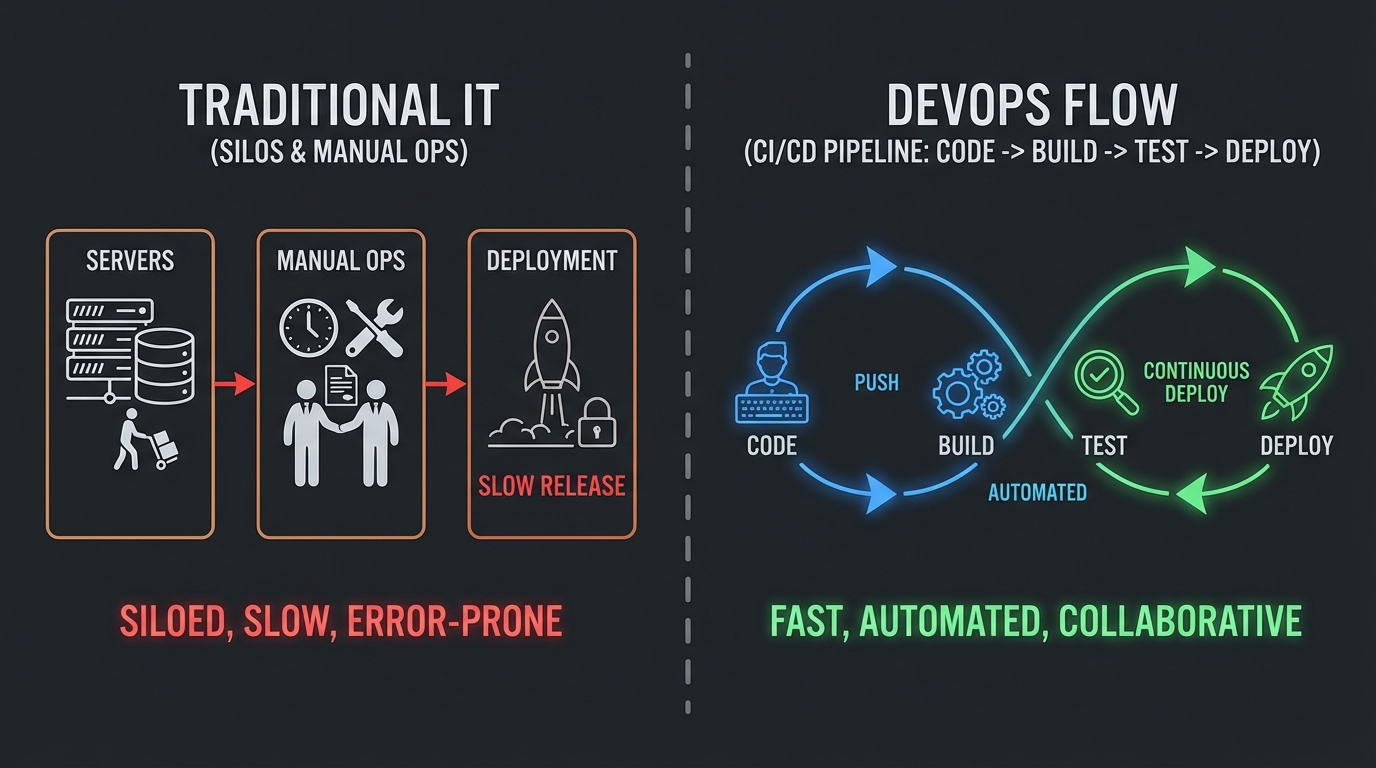
What actually worked for me during that chaotic six-month transition? Well, a few things stand out from my trial-and-error days.
Traditional IT had drilled into me this idea of being super careful, methodical, and avoiding any chance of breaking stuff at all costs. DevOps turned that upside down completely. I had to wrap my head around the fact that breaking things in development could actually be a positive if it kept bigger messes out of production. Man, that mental switch was probably the toughest hurdle for me. I’m not entirely sure, but I think this mindset shift alone took me about three months to really internalize.
From there, I figured out you gotta get your hands dirty right away. Everyone talks about it, but yeah—set up Jenkins on your laptop this weekend. Don’t waste time just watching YouTube tutorials. I blew way too many hours reading up on CI/CD pipelines before I finally built one myself. That first attempt? Total disaster. Took 45 minutes to deploy a simple web app, but at least I got why every step sucked. Actually, now that I think about it, maybe that painful first experience was exactly what I needed—sometimes you have to burn your fingers on the stove before you really understand how hot it is.
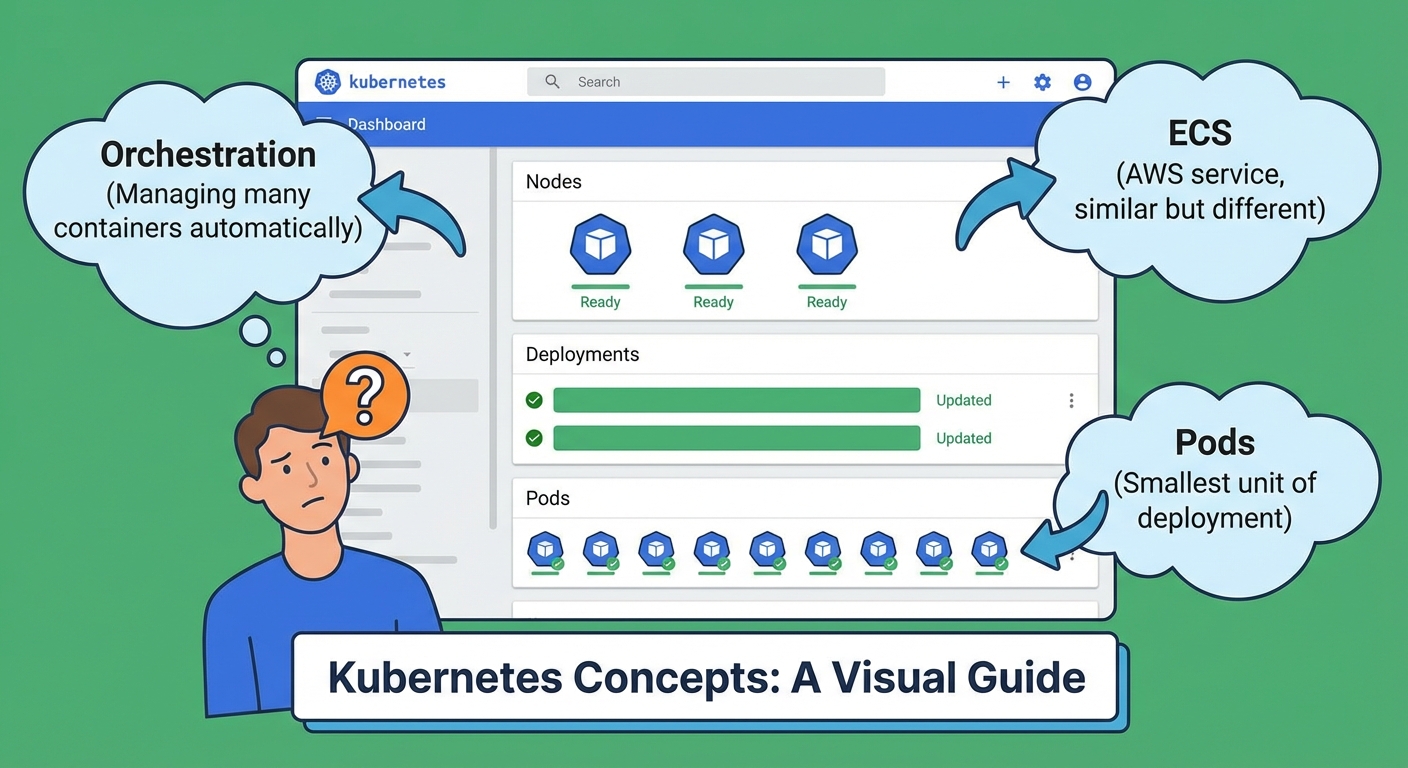
Then there’s picking a cloud platform and sticking with it for a while. I squandered months bouncing between AWS, Azure, and GCP, chasing the dream of mastering them all. The moment I locked in on AWS and grabbed my solutions architect cert, everything clicked into place. EKS became my Kubernetes lifeline, and I could finally see how all the pieces fit together.
One of the strangest “aha” moments hit when I automated a web-scraping bot with Python and Scrapy, just to track my Udemy course sales. Totally not work stuff, but boom—automation suddenly made sense for fixing everyday headaches. DevOps went from empty buzzwords to this real superpower I could actually use.
GitLab’s CI/CD features are criminally underrated compared to Jenkins, especially for smaller teams, if you ask me. Way more intuitive once you get the hang of it.
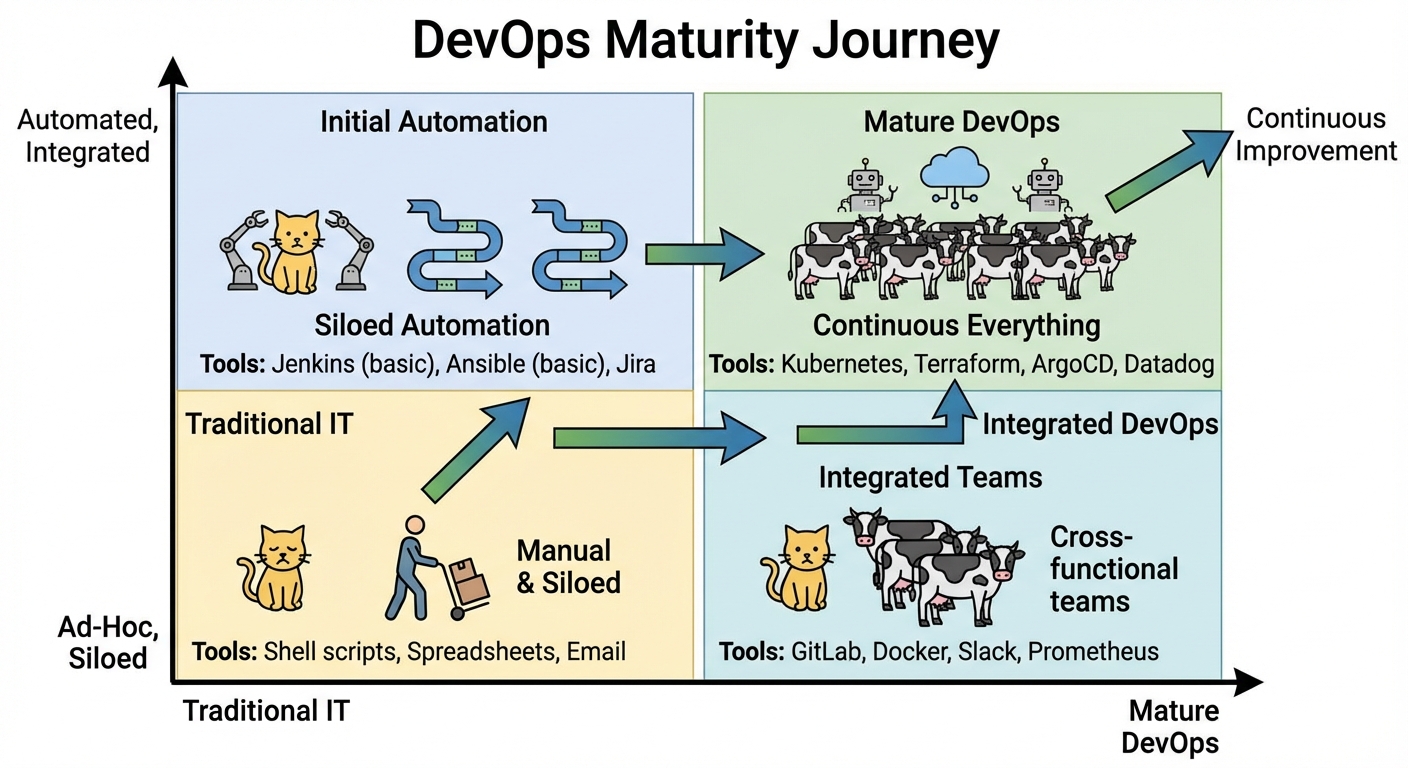
Oh, and looking back, Docker should’ve been my starting point before diving into Kubernetes blind. But honestly, the messy route taught me more than any straight-line plan ever would have. If you’re coming from a traditional IT background like I was, I can’t stress enough how important it is to really nail your Linux fundamentals first—this relates to something I covered in Why You Still Need to Know Linux to Survive in DevOps, because those skills become absolutely critical when you’re troubleshooting containers and managing infrastructure as code.
And if you want to get serious about practicing without spending money on cloud resources, I’ve written about How to Build a Zero-Cost RHEL 10 Practice Lab Using VirtualBox separately—it’s honestly one of the best ways to experiment with automation and configuration management before you start burning through AWS credits.
What’s your biggest fear about making this transition?
💡 Take the next step
If this resonated, RHCSA Bootcamp (RHEL 10) - Arabic is where I teach this systematically — no fluff, just the skills that matter in the real world.