
5 Reasons Your App Needs Containerization Today
Apr 12, 2026
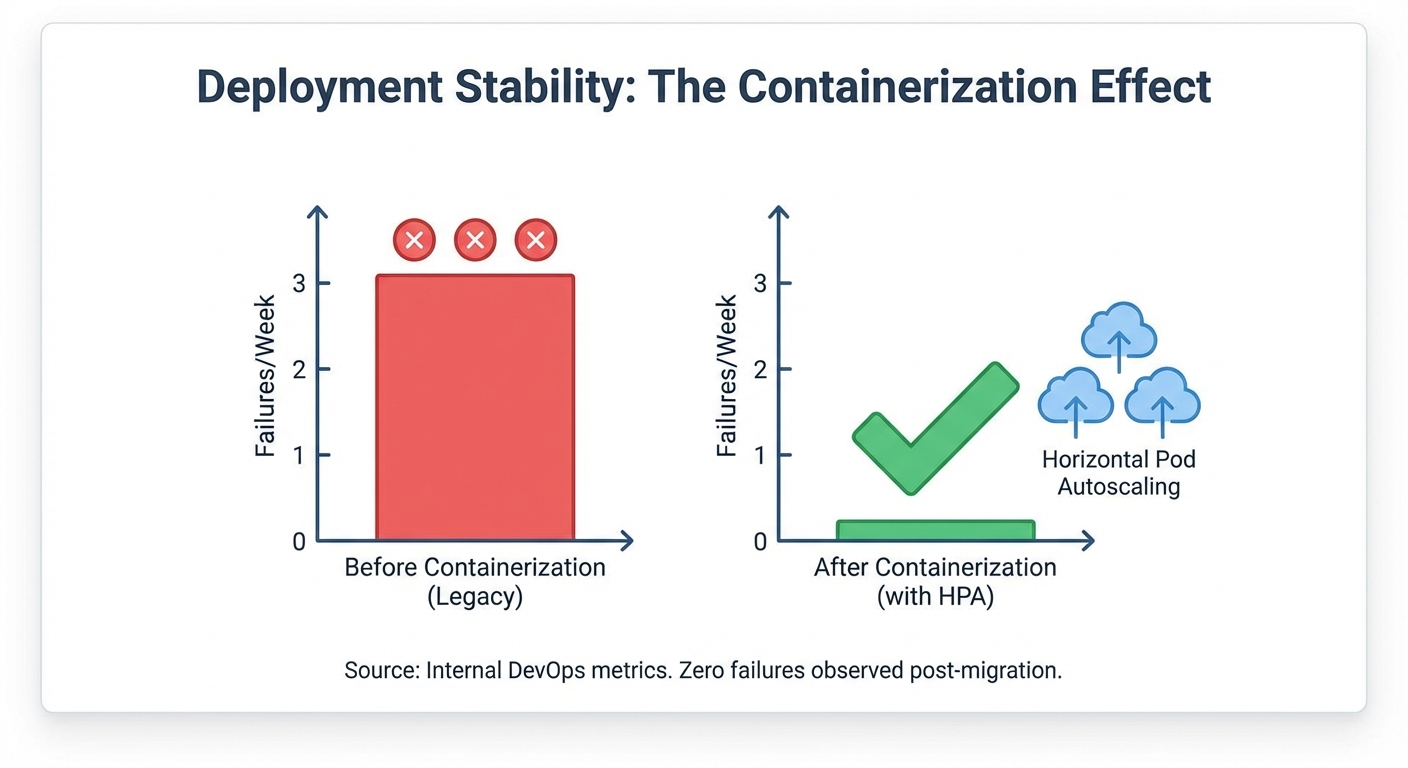
I still remember the exact moment I became a container convert. It was 2019, and I was staring at my third failed deployment of the week. Our monolithic Rails app worked perfectly on my local RHEL 8.2 machine but just kept throwing these mysterious dependency errors on the production Ubuntu servers. My team lead walked over, looked at my screen, and said, “Maybe it’s time we looked at Docker?”
Fast forward five years, and I’ve containerized everything from simple web apps to massive, complex microservices architectures. Here’s what I actually learned along the way.
1. Environment Consistency Actually Saves Your Sanity
Look, “it works on my machine” used to be my most-used phrase. Probably said it daily. Now, with containers, what works locally just works everywhere. Period.
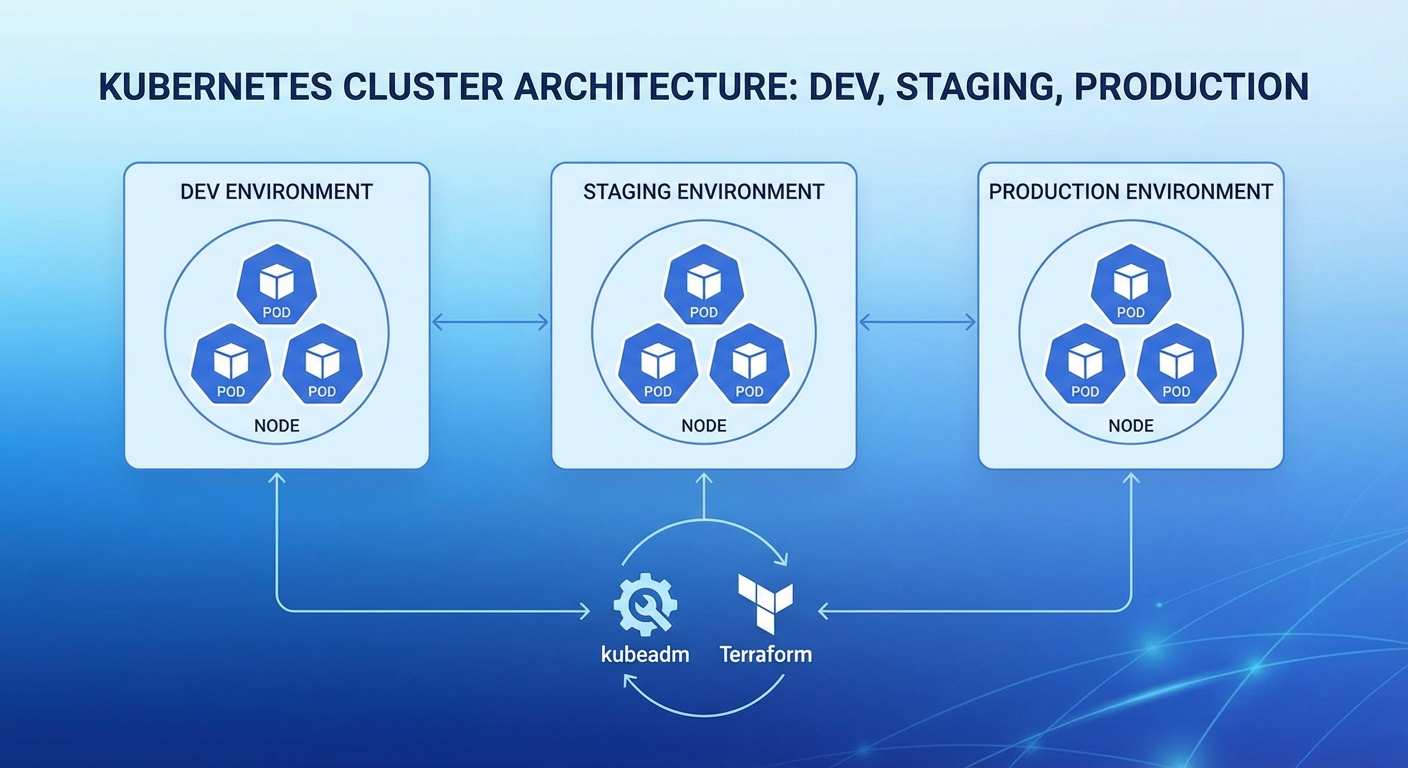
When I designed that full EKS-like Kubernetes cluster using kubeadm and Terraform last year, something finally clicked for me. Every environment—dev, staging, production—was suddenly identical down to the exact OS libraries. That consistency alone eliminates so much friction it’s almost ridiculous.
2. Scaling Becomes Almost Boring
Here’s the thing—I know this sounds dramatic, but horizontal scaling with Kubernetes is genuinely boring now. You add a few replicas in your deployment YAML, and you’re done. That’s it.
Think back to the old days for a moment. Manually provisioning VMs, configuring load balancers, wrestling with infrastructure—God, it was exhausting. If you’re curious about breaking free from that manual infrastructure management approach, I’ve written about Infrastructure as Code Explained: Stop Clicking in the Console separately. The point is, I spent three agonizing weeks setting up auto-scaling for a client’s e-commerce platform back in 2020. Three whole weeks. Today? I could probably knock that exact same setup out in an afternoon. It’s wild how much the tooling has evolved.
3. Resource Utilization Gets Real
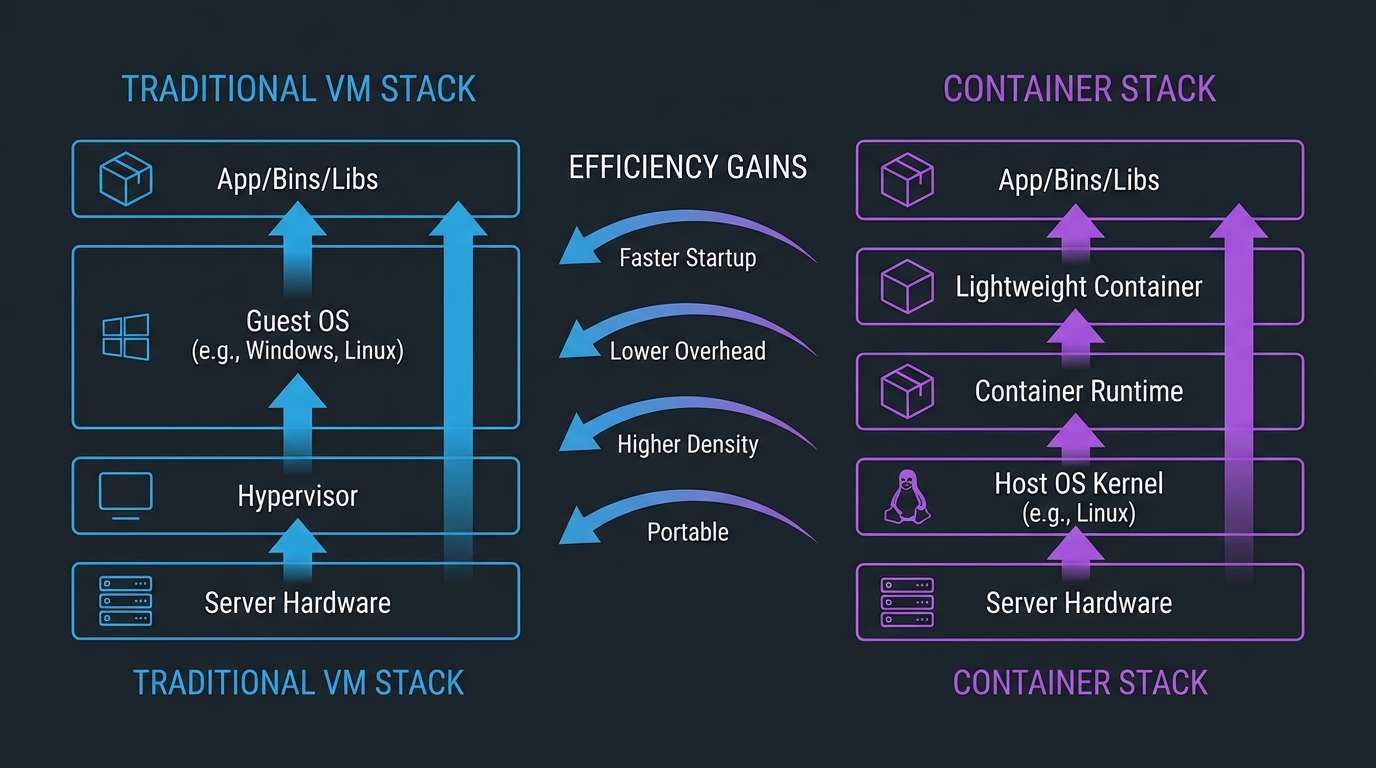
This one really surprised me when I first discovered it. Because containers share the host OS kernel, you can pack way more applications onto the exact same hardware.
When we migrated our microservices from VMs to containers, I measured a 40% improvement in resource utilization. Actually, I’m not entirely sure if it was exactly 40% across the board for every single service, but it was easily in that ballpark for our heavy workloads. That is not a small number, folks. Your AWS bill will absolutely thank you.
4. Rollbacks Stop Being Scary
Remember when rolling back meant praying—literally praying—that your deployment scripts worked in reverse? With containers, rollbacks are mostly just changing image tags. I’ve rolled back production deployments during critical, hair-on-fire incidents without breaking a sweat.
The immutable nature of container images means you know exactly what you’re going back to. There’s real peace of mind in that.
5. Team Onboarding Becomes Painless
New developers can now run our entire stack with a simple docker-compose up. No more spending their first week installing dependencies. No more fighting with local configurations. No more fighting with weird PATH issues.
I really wish I had this when I was starting out. It definitely would’ve saved me from that deeply embarrassing moment when I confused Ansible Tower with Jenkins (they are completely different tools, by the way, not even close to the same thing). This relates to something I covered in Why You Still Need to Know Linux to Survive in DevOps—having that foundational knowledge really helps when you’re working with container orchestration. The difference in onboarding speed now is just night and day.
Looking back, I probably should have adopted containers way sooner. The learning curve definitely felt steep initially, but the payoff has been massive.
What’s holding you back from containerizing your applications?
💡 Take the next step
If this resonated, RHCSA Bootcamp (RHEL 10) - Arabic is where I teach this systematically — no fluff, just the skills that matter in the real world.